


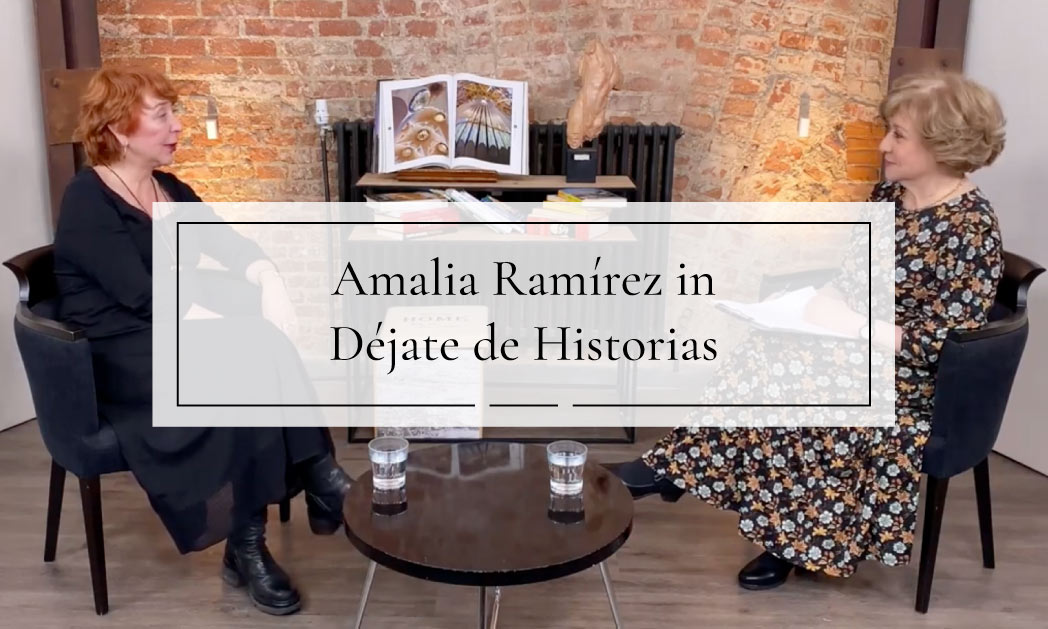
Recently, Amalia Ramírez visited the set of the TV program Déjate de Historias TV to share an intimate conversation about what it means to be at the helm of the most iconic guitar house in Spain.
Introduced as “the most important guitar artisan in Spain,” Amalia took a journey through our family’s 140-year history, revealing anecdotes that very few know and reaffirming why the “Ramírez sound” continues to captivate the world.
Here is the full interview (in Spanish) and a recap of the key moments you cannot miss:
Five Generations, One Passion
During the interview, Amalia recalls with pride that we are now in the fifth generation of luthiers, represented by her niece and nephew, Cristina and Enrique. Maintaining excellence for a century and a half is a challenge that can only be achieved by respecting tradition while embracing constant innovation.
Breaking the Mold: Women in Lutherie
One of the most powerful moments of the chat (minute 07:44) is when Amalia shares an anecdote that defines her character and the changing times. She remembers how, when she took charge of the workshop after her brother passed away, a client refused to buy a guitar simply because the label was signed by a woman.
Amalia’s response was sharp and has gone down in history:
“Well, don’t sell it to him. And if he comes back and wants it, don’t sell it to him either. That’s the end of it.”
— Amalia Ramírez
Today, that barrier is history. In the interview, Amalia vindicates the role of the women who preceded her in the shadows—such as Manuel Ramírez’s widow or Concepción González—and celebrates that today her niece Cristina signs her own guitars with full professional recognition.
Beyond Flamenco and Classical
Although the Spanish Guitar is the soul of Flamenco and Classical music, Amalia highlights the versatility of our instruments. Great Pop and Rock icons like The Beatles, Eric Clapton, Supertramp, or Mike Oldfield have chosen Ramírez for their recordings, proving that artisanal quality knows no musical genres, only sonic excellence.
Innovation: Woods and Secrets
For lutherie lovers, Amalia reveals fascinating details about the construction processes in the workshop:
- The Discovery of Red Cedar: She explains how her father introduced this wood almost accidentally, making it a worldwide standard for soundboards today due to its warmth and response.
- New Materials (Nomex): The use of a “honeycomb” structure (used in aviation) in double-top guitars to gain power and projection without losing the wood’s characteristic sweetness.
From the student guitars to the handcrafted jewels that leave our workshop in Madrid, every instrument carries this legacy of constant searching.
Did you enjoy the interview? Leave us a comment below or visit our shop to experience in person the history that rings in every string.